Key Takeaways

  • The September 10, 2026 Full Esthetics Diploma intake has limited seats, so applying early can improve your chances of securing a spot

  • Training covers core spa services plus business and career preparation, so you graduate ready for real clients and entry-level roles

  • If you do one thing today, start with the program details, then submit your application and book a campus tour to confirm the fit

Looking to Start Your Esthetics Program? Everything to Know Before Sept 10, 2026

Aug 7 / EIE Training Centre

Turn your interest in beauty into a career before the September deadline

You can feel ready for a fresh start, then suddenly realize the calendar is not on your side. The last 2–4 weeks before a start date often fill fastest, and that crunch can turn a clear goal into rushed choices, missed paperwork, and stress you do not need.


If you do one thing first, confirm your timeline and what you need to submit. In practice, a simple plan now helps you compare options calmly and make sure your spot is secured before classes begin.


Next, get clear on what the program actually covers so you can match it to the job you want. A solid esthetics diploma should include both theory and hands-on clinic practice, including client consultation (how you assess needs and set a plan), sanitation and safety routines, and core facial and skin services you can perform consistently under supervision.


Here’s the catch: a program can sound great on paper but still feel overwhelming if you wait too long to visit or ask questions. Booking a tour when you are still a month or more out gives you time to see the training space, understand expectations, and decide without pressure.


So, use these steps to move from interest to a real start date:

  • Read the program overview and list 3 skills you want to graduate with (for example: facials, skincare consultations, waxing)

  • Book a tour to see the clinic setup and ask how hands-on practice works week to week

  • Prepare your application items early and set a personal deadline at least 2 weeks before the start date

  • Follow up to confirm your submission was received and ask what happens next

Common mistake: waiting to apply until everything feels perfect. Fix: apply once you are confident in the direction, then use the tour and admissions conversation to confirm details and plan your schedule.

Why the Full Esthetics Diploma is built for real career readiness

Next, career readiness comes from doing the work repeatedly, not just hearing about it. A strong diploma program is built around hands-on practice, instructor feedback, and real service flow so you can step into a treatment room without freezing when something changes mid-appointment.

A practical benchmark to aim for is comfort with a full 60-minute client service from setup to cleanup, including consultation, timing, and sanitation steps. By the end of training, you should be able to explain what you are doing, why you are doing it, and what the client should expect after the service.


But hands-on hours only help if they are guided. Instructor coaching builds confidence faster because you get corrections in the moment, like adjusting pressure during a facial massage, refining product amounts, or improving your client communication when you recommend home care.


If you do one thing, choose practice sessions where you are expected to follow professional standards each time:

  • Set up your station the same way every service so you stop second-guessing

  • Practice a clear consultation script so you can manage sensitive skin, allergies, and client goals

  • Time your steps so a 60-minute facial does not turn into 80 minutes

  • Finish with proper sanitation and documentation so you are ready for spa expectations


So the outcome is not only skill, but also employability. The Full Esthetics Diploma supports common entry-level paths like spa or clinic assistant roles, junior esthetician positions, and front-to-back treatment room work where you rotate between services and retail.


Here’s the catch: what works in a quiet classroom can fail in a busy spa when you are managing a late client, a last-minute add-on, or a product you have not used before. Training that includes realistic scenarios and consistent feedback is what helps you stay calm, keep standards high, and grow into advanced services and leadership over time.

What you’ll learn and practice during training

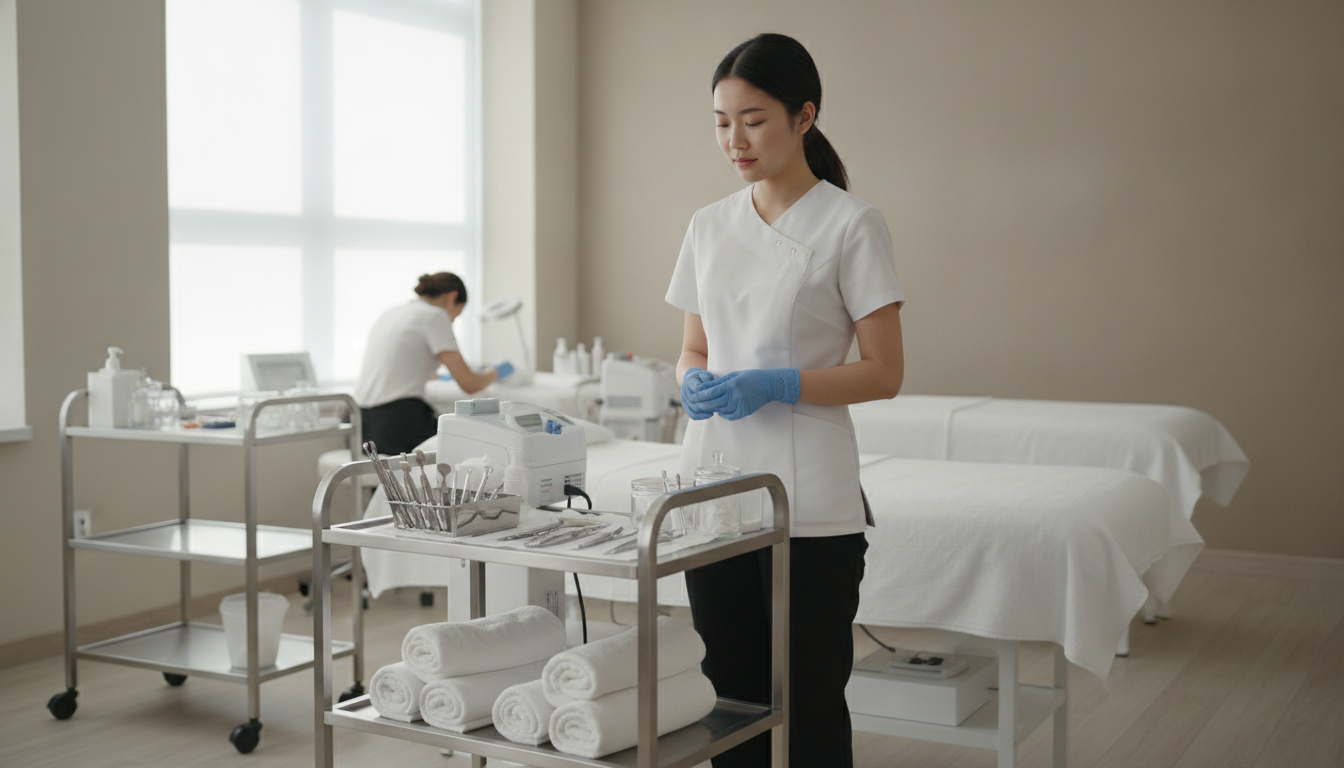
Next, it helps to picture what your week actually looks like once training starts. Most programs split time between classroom theory and a clinic-style setting where you practice services repeatedly, get instructor feedback, and build the habits that keep clients safe and comfortable.


A strong esthetics diploma should prepare you for the core services many spas and salons expect you to offer on day one. You’ll typically study and practice:

  • Waxing basics (consultation, hair growth cycles, product choice, aftercare)

  • Sugaring techniques (paste control, positioning, speed and client comfort)

  • Skincare treatments such as cleansing, exfoliation, masks, facial massage, and finishing steps

  • Body treatments like scrubs and wraps, including timing and room setup

  • Manicures and pedicures, including safe cuticle care and polish application

  • Lash extensions fundamentals, including isolation, placement, and safe removal


Here’s the catch: technique is only half the job, because client results depend on professional standards every single appointment. During training, you’ll also practice career skills that show up in every role, from spa assistant to solo service provider:

  • Client care professionalism, including consult questions, contraindications, and clear aftercare scripts

  • Sanitation standards such as disinfection steps, single-use rules, and clean-to-dirty workflow

  • Business and career preparation like service timing, rebooking language, retail basics, and building a simple portfolio


If you do one thing, make sure you leave training with a repeatable service flow for at least 3 core treatments you want to be hired for. A common mistake is focusing only on getting the steps right, but not practicing setup and cleanup, so your timing runs long; fix this by timing your full appointment from room prep to final sanitation, then improving by 5 minutes at a time.

Your next steps to join the September 10, 2026 intake

Next, switch from research mode to a simple plan so you are not rushing decisions in the final weeks before September 10, 2026.


Start by reviewing the program details with specific questions in mind: how the weeks are structured, how much time you will spend in hands-on practice versus theory, what you will need to bring each day, and what a typical student schedule looks like. If you do one thing, make it this: confirm the training experience matches the kind of work you want to do after graduation, whether that is spa facials, waxing, client consultations, or front-desk plus service work in a clinic setting.


Also, submit your application early and book a tour so you can see the campus and remove unknowns before you commit.


A tour is your chance to check the details that matter for success and confidence:

  • See the classrooms and practical training areas and ask how sanitation and safety are handled

  • Meet the team and ask who you would contact if you need academic or scheduling support

  • Bring your availability and commute details, then map out a realistic weekly plan

  • Ask what the first 2 weeks typically look like so you are ready for the pace

Here’s the catch: a common mistake is waiting to apply until you feel 100 percent certain, then scrambling to arrange a tour, paperwork, and your schedule at the same time. The fix is to do the tour and application in the same window, then finalize your plan with clear dates and next actions.

Your future is built in the small decisions you make today.


So if September 10 is your start line, choose one step you can take this week to move from interest to enrollment. For example, set a 20-minute calendar block to write down your questions, check your schedule for training hours, or contact the school to confirm what you need to submit and when.


If you do one thing, make it this: pick a date and time in the next 7 days to take action and treat it like an appointment. A common mistake is waiting until you feel fully ready, but readiness usually comes after the first step, not before it.

Apply today or book a tour